
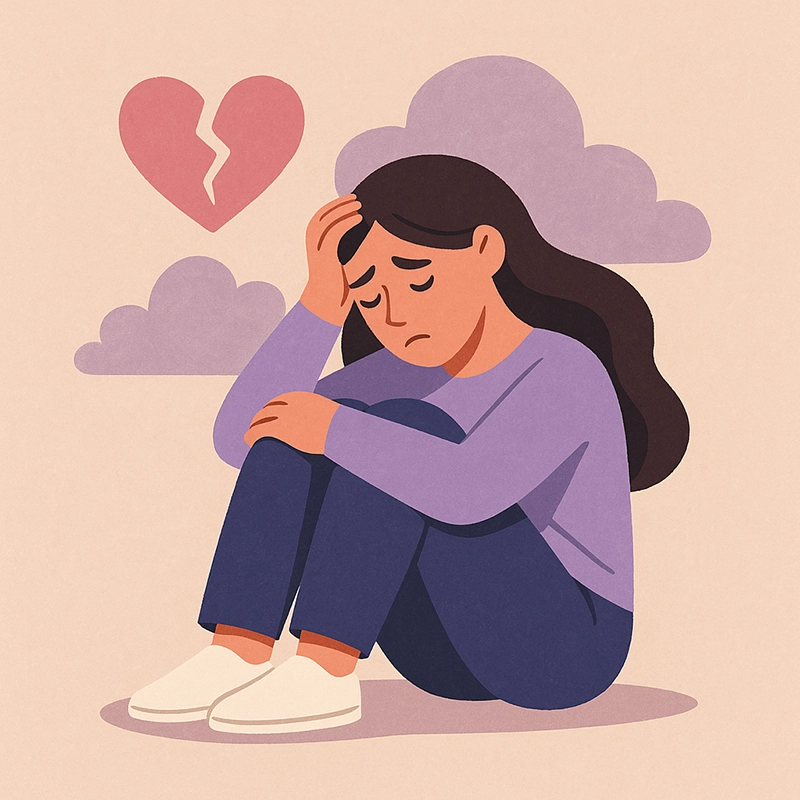
Why the Mind Disconnects During Emotional Overload
Depersonalization often appears during some of the most overwhelming moments in life — after a breakup, during major stress, or in the aftermath of trauma. It can make you feel disconnected from yourself, like you're watching your life from the outside.
If this is happening to you, it doesn’t mean you’re damaged or losing control. Depersonalization is a protective response, not a sign of danger.
1. Emotional Overload Pushes the Brain Into Protection Mode
Breakups, loss, betrayal, or sudden life changes can create intense emotional pain. When your brain senses that the emotional load is too heavy, it may “dim” your connection to yourself to prevent overwhelm.
People describe it as:
- Feeling emotionally numb
- Watching yourself from outside your body
- Feeling distant from your thoughts or actions
- Experiencing a muted or foggy sense of self
This can feel scary — but it’s your mind trying to stabilize you.
2. The Nervous System Can Get Stuck in Freeze Mode
When emotional pain becomes too intense, the nervous system may switch from fight-or-flight to freeze.
This freeze state can cause:
- Feeling “shut down” or detached
- Reduced emotional expression
- Slowed thinking
- A sense of being on autopilot
The freeze response is the body’s way of hitting pause during emotional overload.
3. Trauma Can Trigger Protective Dissociation
You do not need a major trauma for depersonalization to occur — but when trauma is part of the picture, DPDR can become the brain’s way of creating distance from overwhelming internal experiences.
This doesn’t mean trauma permanently impacts you. It simply means your nervous system is trying to keep you safe.
4. Major Life Stress Weakens Emotional Bandwidth
Chronic stress — work changes, moving, illness, caregiving, financial pressure — slowly exhausts the nervous system. When it becomes too much, depersonalization can show up as a last-resort coping tool.
It’s your brain saying: “I need a break.”
5. Why It Feels So Unsettling
Depersonalization feels alarming because it disconnects you from your usual sense of self. But the fear usually comes from misinterpreting the sensation.
What’s happening is:
- Your mind is protecting you
- Your emotions temporarily “turn down the volume”
- Your nervous system is trying to create safety
You are not in danger — you are overwhelmed.
Grounding Tools That Help You Reconnect
Depersonalization fades as the nervous system recovers. These tools can help:
- Gentle sensory grounding — holding something warm or cool
- Movement — walking, stretching, shaking out tension
- Breathing with long, slow exhales
- Emotional validation — reminding yourself that the response is normal
The goal isn’t to “force” the feelings away — it’s to show your brain that you’re safe to come back online.
You Can Feel Like Yourself Again
Depersonalization after emotional stress is temporary and reversible. As your nervous system stabilizes, your sense of self naturally returns.
Recovery is not about being stronger — it’s about being gentler with yourself while your system recalibrates.
Presently includes grounding tools designed for DPDR — to help calm dissociation, reduce anxiety spikes, and reconnect with your body and emotions.