
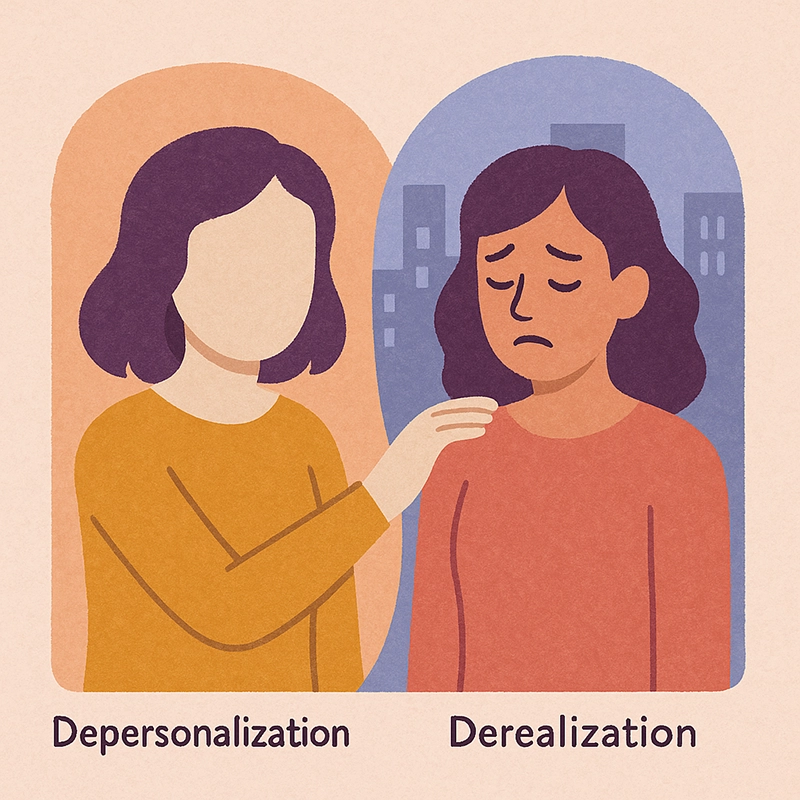
Derealization vs Depersonalization: How to Tell the Difference (And Why It Matters)
People experiencing DPDR often say, “I don’t know whether this is depersonalization or derealization.” The two sensations can overlap, happen together, or switch back and forth — which makes them easy to confuse.
But understanding the difference can actually help reduce fear. When you can name what you’re experiencing, it stops feeling like an unknown threat and starts feeling like something your nervous system is doing for a reason.
What Derealization Feels Like
Derealization affects how the world around you feels. People describe it as:
- "The world looks dreamlike or artificial."
- "It feels like there's fog or glass between me and everything."
- "Things look too sharp, too bright, or too flat."
- "I know where I am, but it doesn’t feel familiar."
In derealization, your environment feels “off,” distant, or unreal — but you still logically know it’s real.
What Depersonalization Feels Like
Depersonalization affects how you feel internally. People describe sensations like:
- "I feel disconnected from myself."
- "My thoughts don't feel like mine."
- "I feel numb or blank."
- "It's like I'm watching myself from the outside."
- "My voice or movements don't feel familiar."
Instead of the world feeling unreal, your sense of self feels disrupted.
Why They Often Happen Together
Both derealization and depersonalization come from the same place in the brain: a protective dissociative response triggered during overwhelming stress or anxiety.
This is why many people say:
- "I feel unreal and everything around me looks unreal too."
The nervous system is essentially trying to “turn down the volume” on emotional and sensory input to avoid overload.
Which One Is More Common?
Both are common, but derealization tends to appear more during panic, anxiety spikes, or sensory overload, while depersonalization appears more during:
- burnout
- chronic stress
- emotional exhaustion
- intense rumination
Some people experience one far more than the other — and that’s normal.
Why Understanding the Difference Helps
Even though both experiences come from the same nervous-system response, knowing the distinction helps because it gives you clarity.
When people can say:
- “This is derealization — my environment feels strange.”
- “This is depersonalization — I feel disconnected from myself.”
…the fear tends to decrease. Naming the sensation calms the threat response.
How to Ground Yourself During Either Sensation
Whether you’re dealing with derealization or depersonalization, grounding tools work by helping your nervous system shift out of a protective dissociative mode.
1. Sensory Grounding for Derealization
Look around and focus on textures, colors, shapes, or objects in the room. Activating external senses helps reconnect you to your environment.
2. Body Awareness for Depersonalization
Place your hand on your chest or stomach. Feel your breathing. Feel your feet on the floor. Anything that reconnects you to your physical body can help bring you back.
3. Slow, Long Exhales
Regardless of which sensation you're experiencing, longer exhales activate the parasympathetic nervous system, reducing both anxiety and dissociation.
You’re Not Losing Your Mind — Your Brain Is Protecting You
Both derealization and depersonalization feel alarming, but they are temporary, reversible stress responses — not signs of psychosis or permanent damage.
Understanding the difference helps you feel more in control, but the key truth remains: your brain is trying to protect you, not harm you.
Presently includes grounding tools designed specifically for DPDR — breathing guides, sensory exercises, calming audio, and a quick “Emergency” mode for difficult moments.